Heat pumps are central to cutting carbon emissions from buildings and to making the UK less exposed to fossil-fuel price shocks. Yet the Boiler Upgrade Scheme – the grant that successive governments have kept and expanded to subsidise heat-pump installations – has been heavily criticised. Critics argued it was mostly a transfer of taxpayers’ money: to households who would have bought a heat pump anyway, and to installers who would simply raise their prices and pocket the grant.
In a new CEP discussion paper – Thin Markets, Thick Subsidies: Local Competition and the Incidence of Heat-Pump Grants – Shefali Khanna, Florian Münch, Aurélien Saussay and I find the opposite.
On 23 October 2023 the grant for an air-source heat pump in England and Wales rose from £5,000 to £7,500. Scotland, which runs its own scheme, saw no change. Comparing 260,000 certified installations in Northern England and Scotland before and after the change lets us isolate the effect of the larger grant.
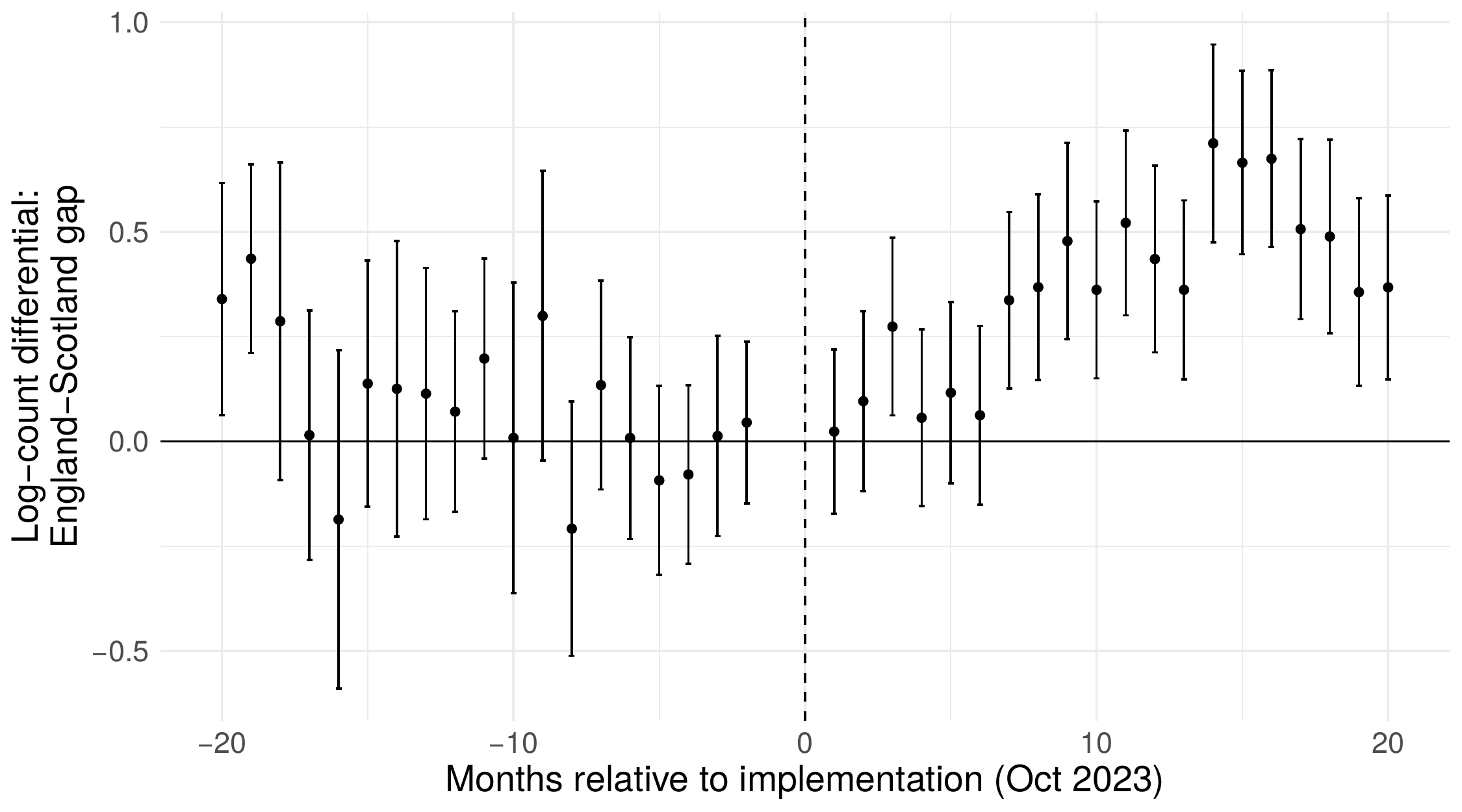
Installations rose by 24%. The increase raised monthly installations by about a quarter relative to Scotland, with no sign of a pre-existing trend, adding roughly 7,200 heat pumps in Northern England alone over the following 20 months.
Installers did not pocket the money. Installation costs fell by about £830, so households saved more than the extra £2,500. Part of that came from a shift to smaller, more efficient heat pumps, but even for the same installer fitting the same model, prices fell by at least £200 – and by more in areas with more competition.
Bigger local markets attracted new installers and drew existing ones from further afield. The number of installers active in a neighbourhood in a given month rose by about a fifth, and the distance between installations and installers’ bases increased. The extra competition pushed prices down, and both the installation and the price response were larger where the local installer market was already thick before the policy.
Good value for public money. Counting the carbon savings, each £1 of public money spent on the grant increase delivered about £2.10 in benefits (a marginal value of public funds of 2.1), rising to 2.5 in the most competitive markets.
The policy lesson: grant size and installer market thickness are complements, not substitutes. Demand subsidies for clean technologies work best alongside measures that bring more installers into local markets – training, certification and entry support.
Paper: Thin Markets, Thick Subsidies: Local Competition and the Incidence of Heat-Pump Grants, CEP Discussion Paper 2227 (PDF). Play with the entry model behind the competition result in the interactive version.