There is a fascinating story about ASML in Works in Progress that traces how a tiny Eindhoven spin-out came to dominate one of the most consequential technologies of our time.
A complementary way to look at ASML is through the lens of knowledge spillovers — the value that the firm’s innovations create for other innovators down the line. Using the Innovation Strategy Explorer, we can put a number on this.
ASML generates large global spillovers — but Qualcomm’s are even larger
ASML innovations generate roughly $16 million in average global spillovers per patent family. That is well above the average Dutch patent. It is also, perhaps surprisingly, well below the average Qualcomm innovation that involves Dutch innovators:
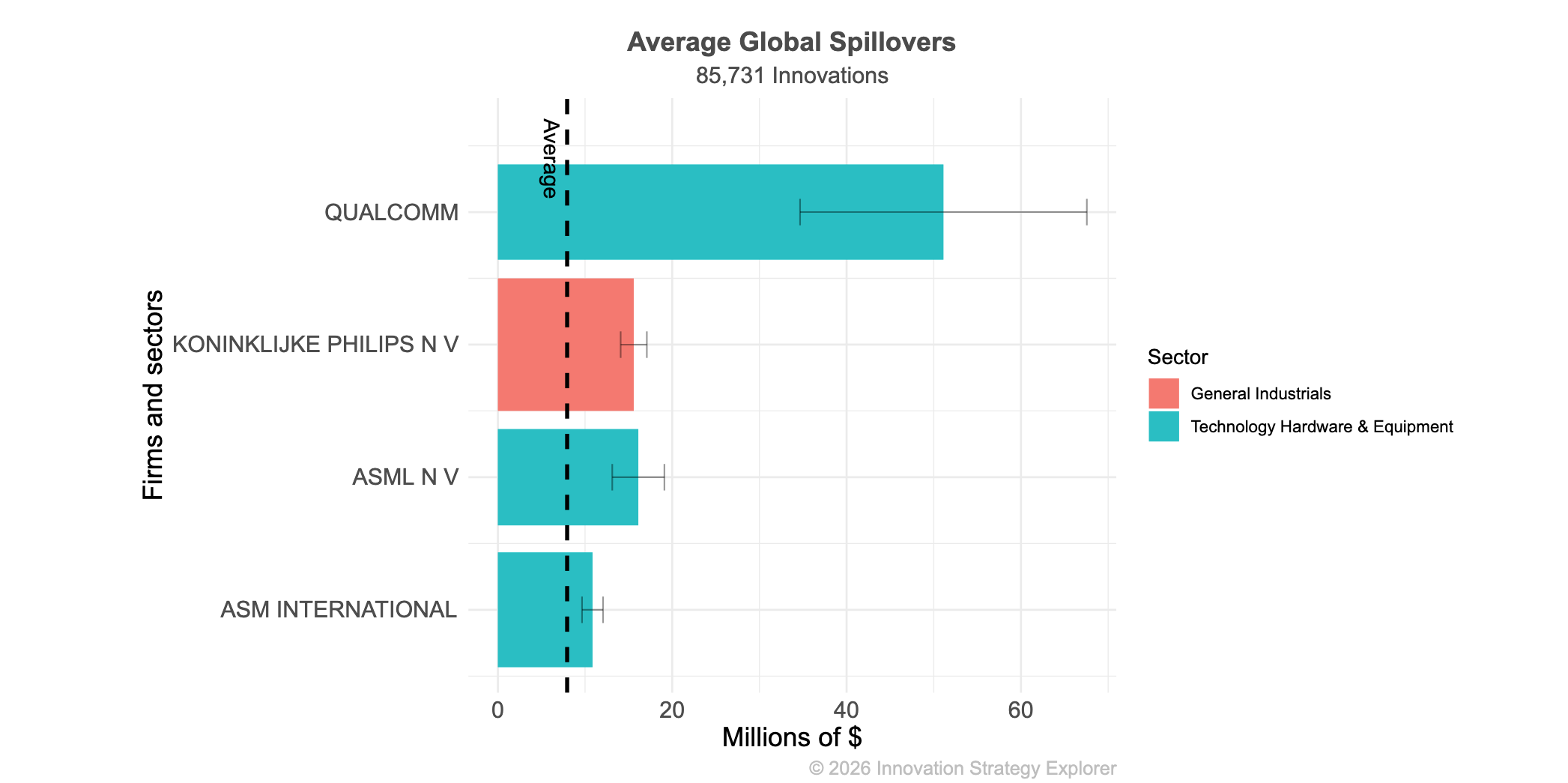
The Dutch picture reverses the ranking
The picture reverses sharply when we restrict the spillover benefits to other Dutch innovators only. Now ASML — together with neighbouring Eindhoven-region firms ASM International and Philips — dominates:
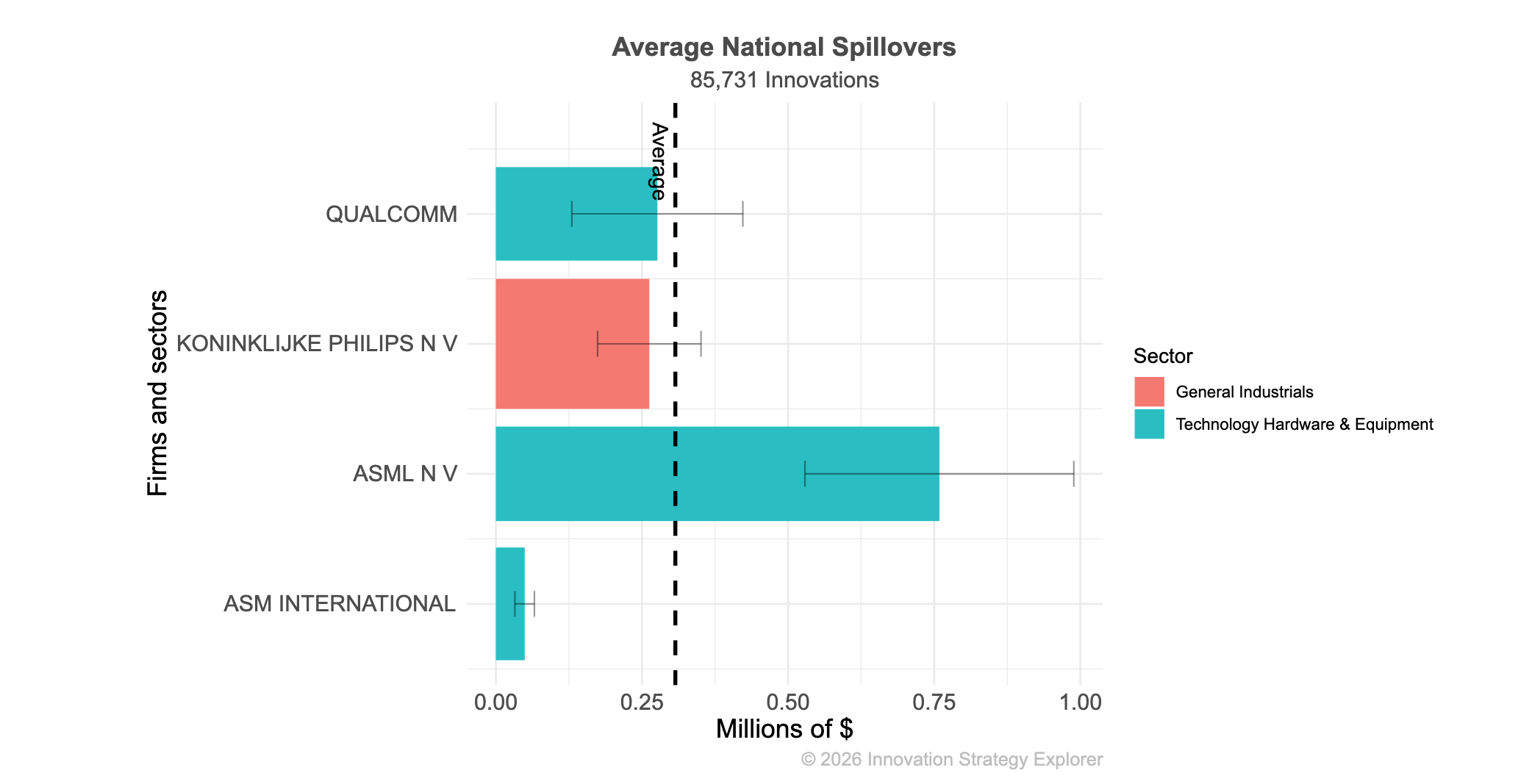
Why?
Successful industrial strategy? Greater commitment by a local firm to its local innovation ecosystem? A more effective revolving door of local engineers and scientists? It’s unclear at this stage — but you can see the pattern from “space” using HiGGlo, the friendly citation-network viewer.
The direct and indirect citation network of Qualcomm is dense and globally distributed:
| Qualcomm — global citation network | ASML — global citation network |
|---|---|
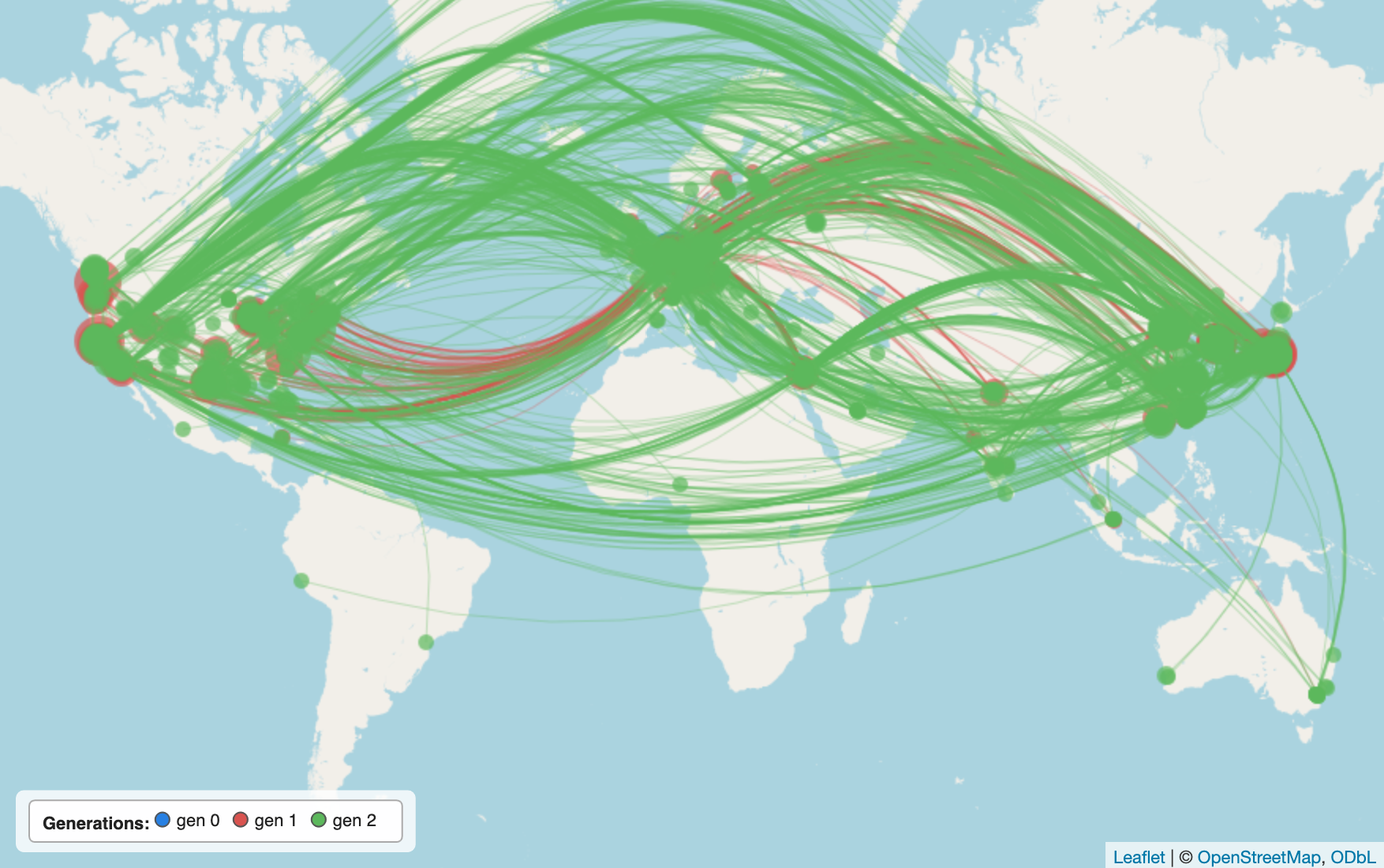 Interactive (Qualcomm) |
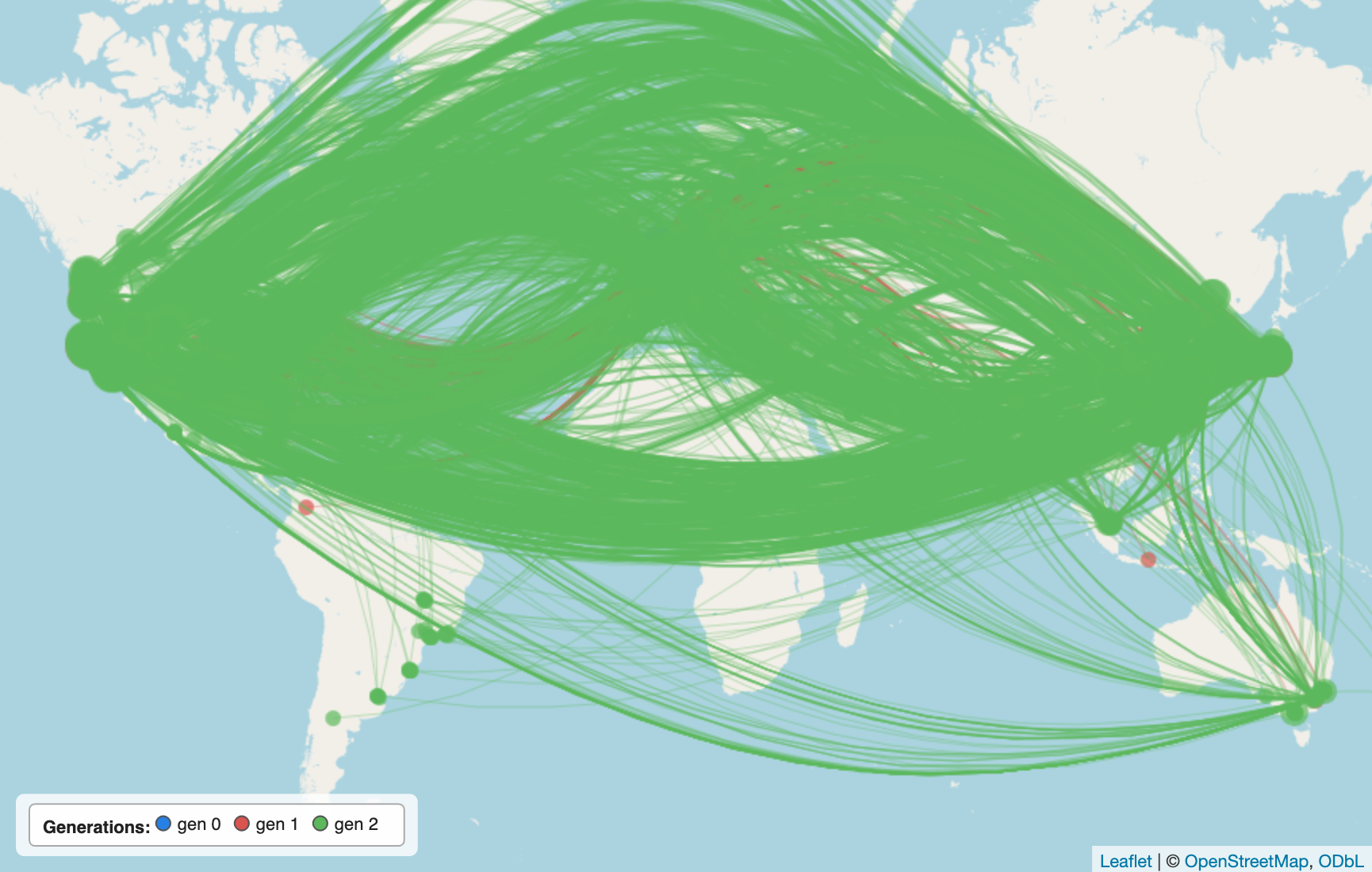 Interactive (ASML) |
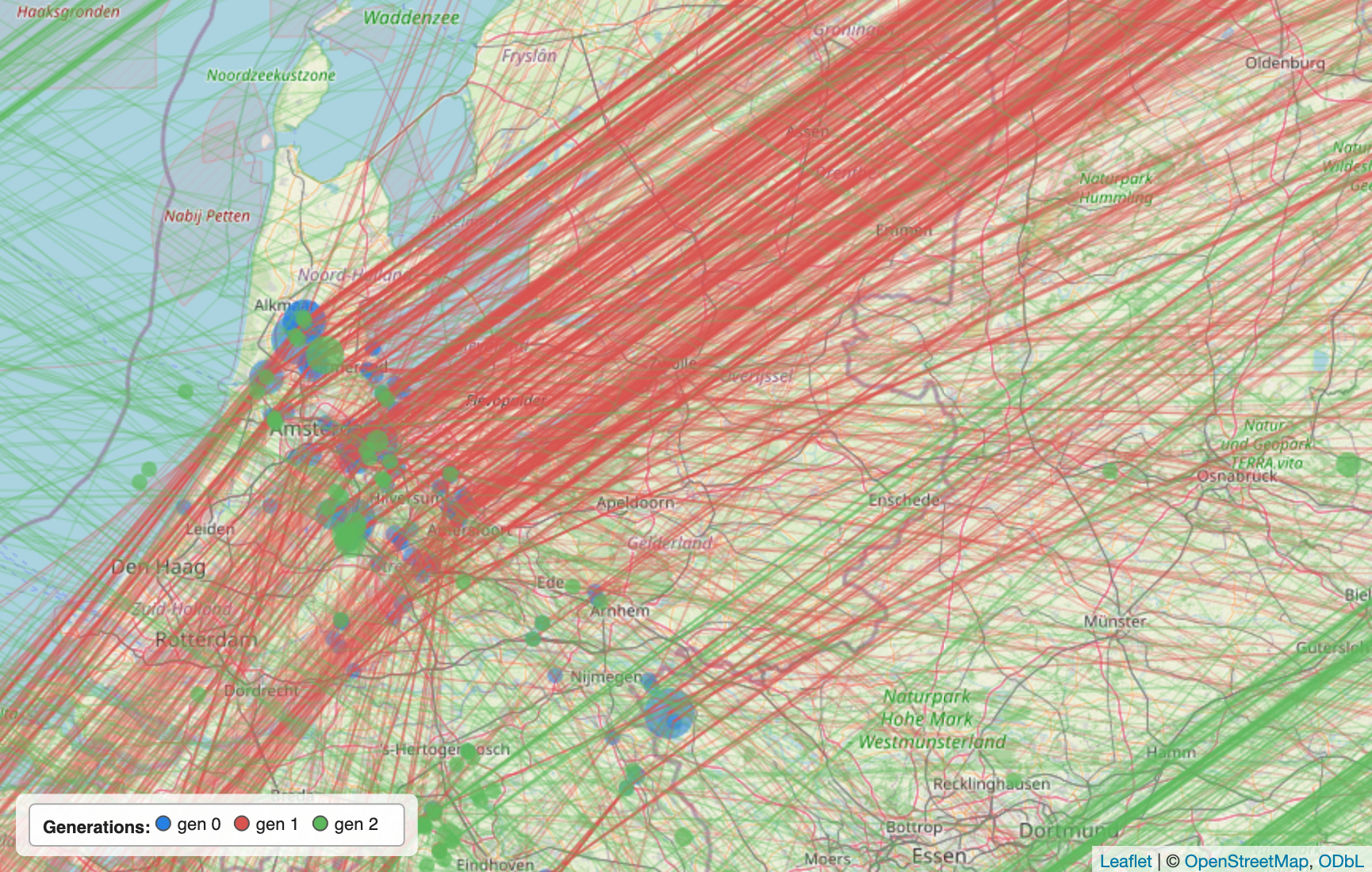
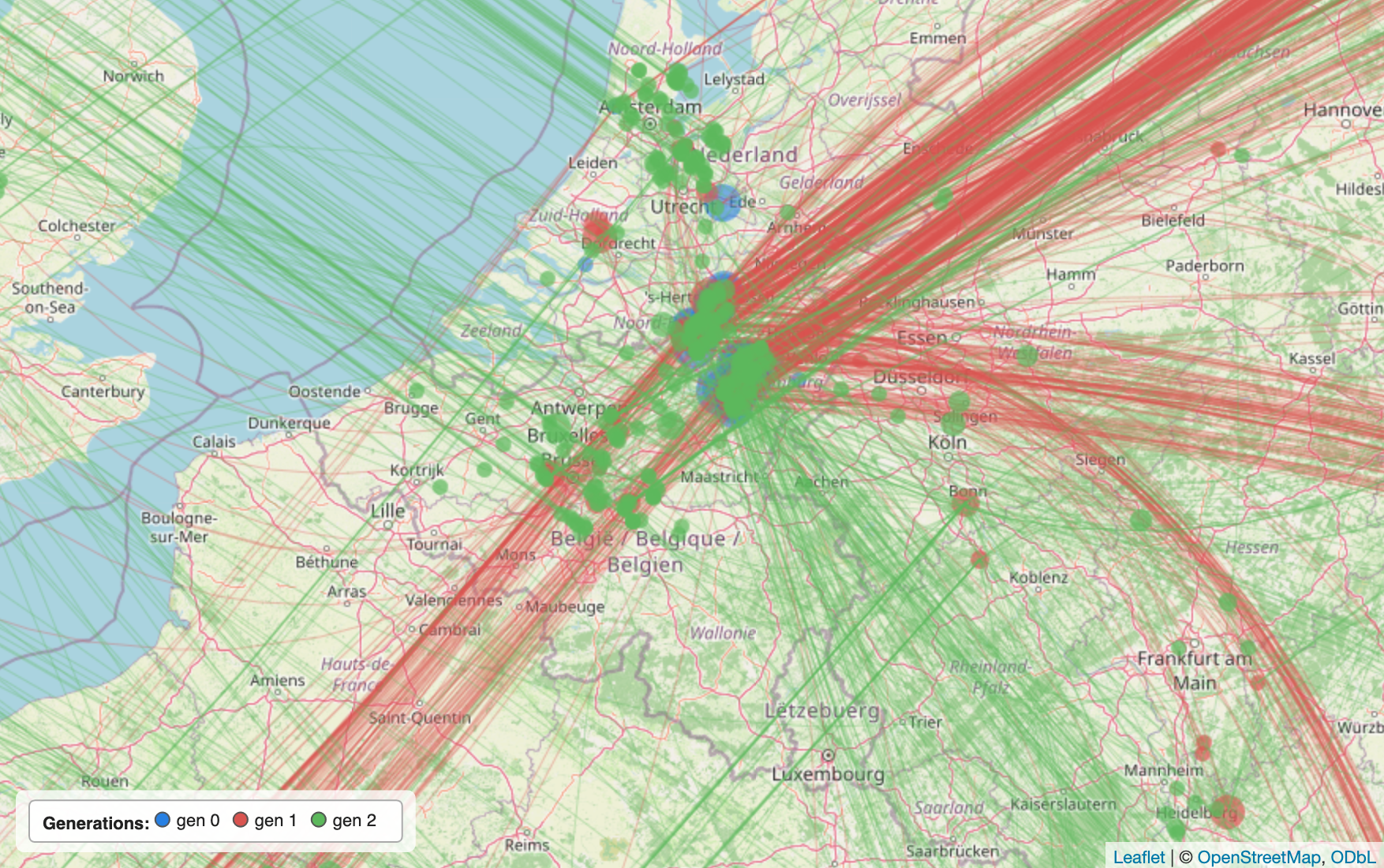
ASML creates more localised spillovers within the Netherlands — even if many of these are indirect (the lighter, multi-hop edges in HiGGlo):
| Qualcomm — local spillovers | ASML — local spillovers |
|---|---|
|
|
Take-away
ASML is a remarkable global champion, but its quieter contribution may be how much of its knowledge gets recycled within the Netherlands. Whether that comes from industrial strategy, local engineering culture, or just the gravitational pull of a single hub town remains an open question — but the data are now public enough to start asking it.
Explore the underlying data yourself with the Innovation Strategy Explorer and the citation-network viewer HiGGlo.